Book Appointment Now

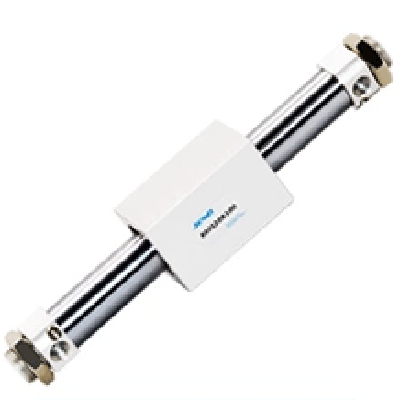
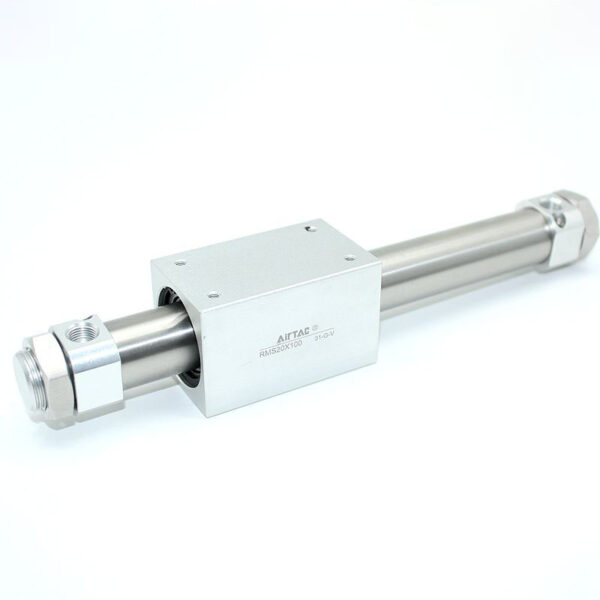
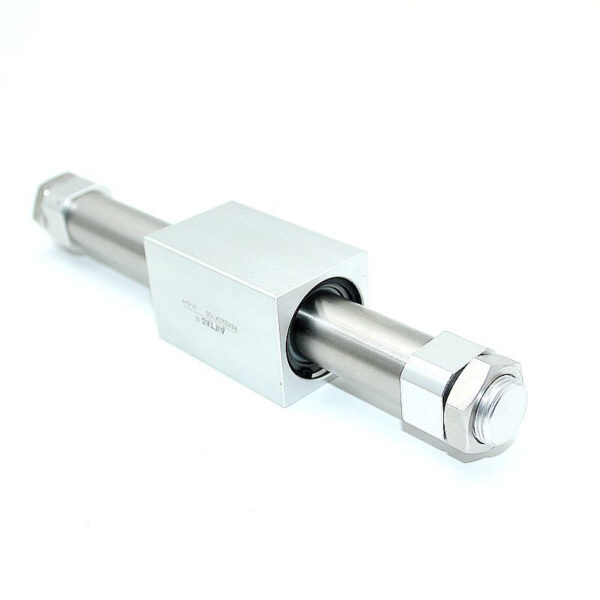
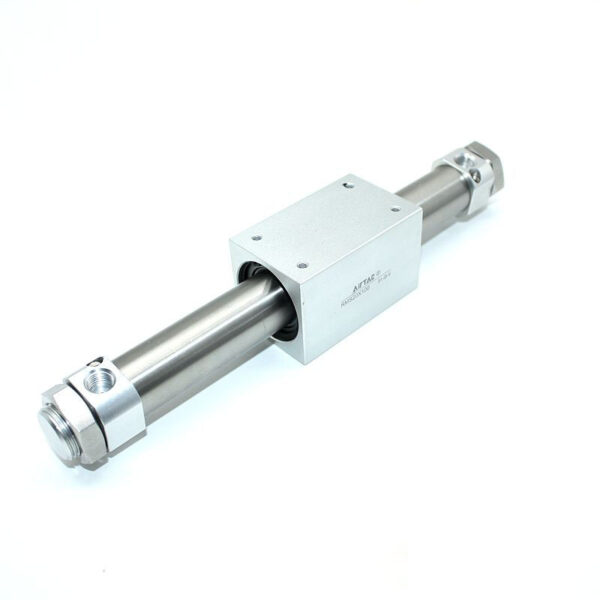
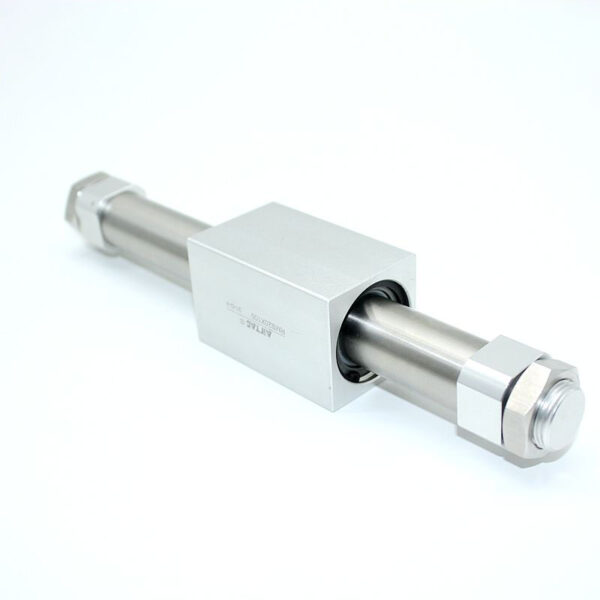
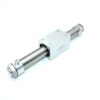
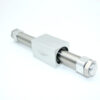
Mechanically Jointed Rodless Cylinder RMS – Providing Linear Solutions for the Global Industry
Description
Series RMS: Magnetically Coupled Rodless Cylinder
High-Efficiency Linear Motion with Integrated Magnetic Coupling
The Series RMS is a high-performance pneumatic rodless cylinder designed for space-constrained industrial automation. It utilizes a magnetically coupled design where an internal mobile piston, fitted with annular magnets, drives an external carriage through a high-strength magnetic field. This architecture eliminates the need for mechanical connections through the cylinder wall, ensuring a completely leak-proof and dust-proof operation.
——————————————————————————–
Technical Specifications
The RMS series is engineered to provide stable performance across a wide range of operating conditions.
| Feature | Specification Details | Source |
|---|---|---|
| Bore Sizes (mm) | 10, 16, 20, 25, 32, 40 | |
| Action Type | Double Acting | |
| Fluid | Air (filtered by 40μm element) | |
| Operating Pressure (ø10) | 0.2 ~ 0.7 MPa (29 ~ 100 psi) | |
| Operating Pressure (ø16 – ø40) | 0.15 ~ 0.7 MPa (22 ~ 100 psi) | |
| Proof Pressure | 1.2 MPa (175 psi) | |
| Temperature Range | -20°C to 70°C | |
| Speed Range | 50 to 400 mm/s | |
| Cushion Type | Rubber Bumper + Adjustable Pneumatic Cushioning | |
| Stroke Tolerance | +1.0/0 mm (up to 250st) to +2.0/0 mm (over 1001st) |
——————————————————————————–
Key Performance Indicators
1. Safe Holding Force
The magnetic coupling determines the safe driving force before the carriage decouples from the piston.
| Bore Size | ø10 | ø16 | ø20 | ø25 | ø32 | ø40 | Source |
|---|---|---|---|---|---|---|---|
| Force (N) | 55 | 140 | 220 | 345 | 560 | 880 |
2. Maximum Loading Capacity
For optimal service life, the mass to move must be less than the theoretical holding force, and radial loads must be strictly managed.
- Horizontal Mounting: Max loading table weight ranges from 0.4 kg (ø10) to 2.0 kg (ø40).
- Vertical Mounting: Max load weight (Loading table + Load) ranges from 2.2 kg (ø10) to 37 kg (ø40).
——————————————————————————–
Specialized Middle-Stop Application
When implementing a middle-stop mechanism (using an external stopper), specific parameters must be observed to prevent decoupling and equipment damage.
- Max Allowable Working Pressure: Must not exceed 0.55 MPa during middle-stop operations.
- Allowable Kinetic Energy (J):
- ø10: 0.03 J
- ø20: 0.24 J
- ø40: 1.53 J
——————————————————————————–
Core Engineering Advantages
- Superior Air-Proof Design: The carriage and piston are physically isolated, making the unit dust-proof and ideal for environments where traditional rod-type cylinders might fail due to seal contamination.
- Smooth Motion Control: The combination of non-adjustable rubber bumpers and adjustable pneumatic cushioning at both ends ensures smooth deceleration and impact reduction.
- Space-Efficient Mounting: Available in three mounting configurations—Basic type, FA type (Front Flange), and LB type (Foot Bracket)—with a compact profile that saves significant axial space compared to standard cylinders.
- Precision Guidance: The carriage slide moves freely along the main tube, supported by high-quality wear-resistant materials for consistent linearity.
——————————————————————————–
Construction Materials
| Component | Material | Notes | Source |
|---|---|---|---|
| Barrel | Stainless Steel | High-precision finish | |
| Body / End Cap | Aluminum Alloy | ||
| Magnets | Rare-earth Material | High holding force | |
| Piston / Washer | Aluminum Alloy / Stainless Steel | ||
| Seals | TPU / NBR | ||
| Wear Ring | Wear-resistant Material |
——————————————————————————–
Installation and Maintenance Guidelines
- Air Quality: The compressed air must be filtered to 40μm or below to prevent internal impurities from entering the cylinder.
- Workpiece Selection: Non-magnetically conductive materials are recommended for workpieces. If magnetically conductive materials are used, the operational lifetime may be halved.
- Intermediate Stops: Use shock absorbers at external stoppers to ensure hitting is smooth and to avoid magnetic decoupling.
- Storage: If stored for long periods, apply anti-rust treatment and use anti-dust caps on air ports