Book Appointment Now

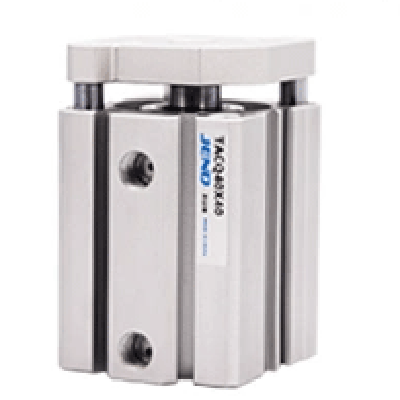
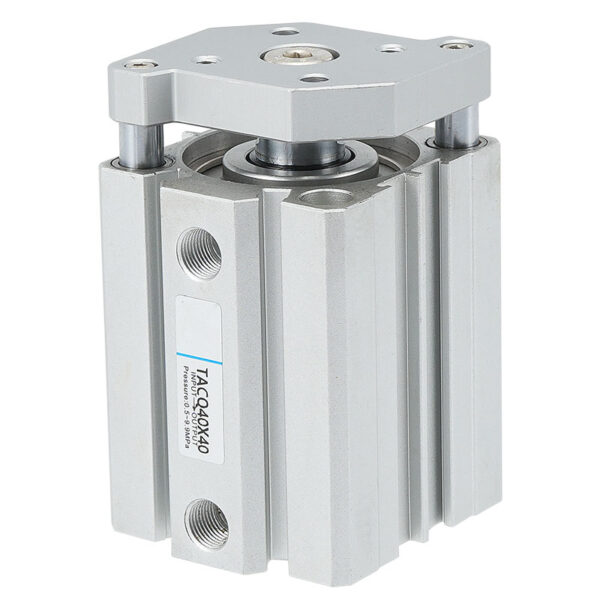
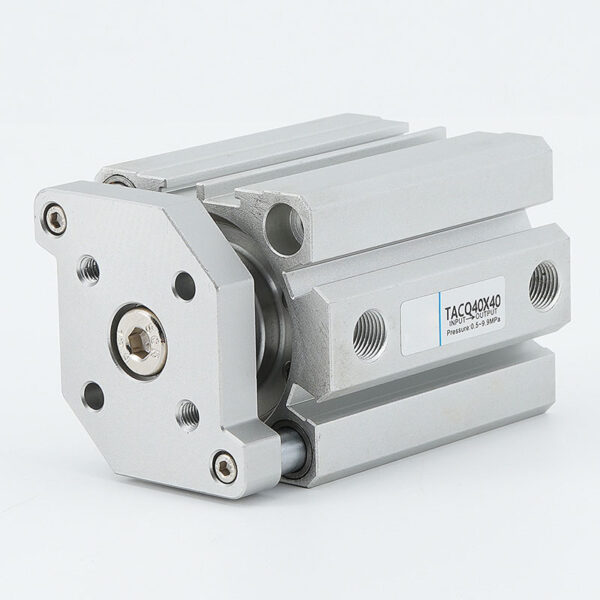
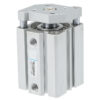
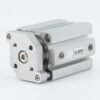
Compact Cylinder with Guide Rod TACQ: High-Precision Solutions for Global Manufacturing
Description
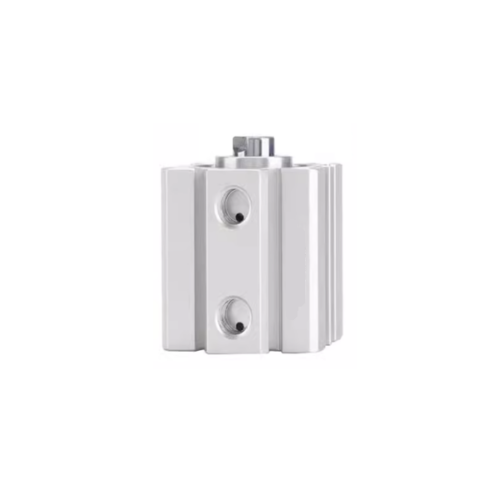
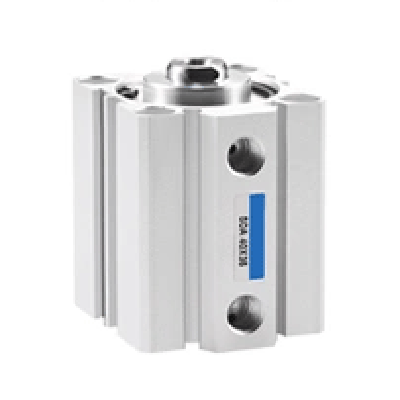
TACQ Series: Compact Cylinder with Integrated Guider
High-Precision, Non-Rotating Pneumatic Solution for Industrial Automation
The TACQ Series is a robust, double-acting compact cylinder engineered for applications requiring high precision and resistance to lateral loads. By integrating a specialized guide rod structure, this series ensures a high degree of non-rotating accuracy while maintaining a space-saving footprint.
——————————————————————————–
Performance Features
- JIS Standard Compliance: Fully implemented according to JIS standards, ensuring compatibility and reliability in global automation systems.
- Enhanced Durability: The internal diameter of the aluminum body is treated with specialized rolling and hard anodizing, providing excellent abrasion resistance and a long service life.
- Precision Non-Rotating Structure: The double-rod design is specifically engineered to bear large working loads and maintain a stable, non-rotating orientation.
- Compact Integration: C-clips are utilized to connect the body with the covers, resulting in a compact and reliable assembly that saves critical installation space.
- Smart Sensing: Features integrated magnetic switch slots around the cylinder body for easy installation of induction switches.
——————————————————————————–
Technical Specifications
The TACQ series is built to operate under demanding industrial conditions with the following parameters:
| Feature | Specification Details |
|---|---|
| Bore Sizes (mm) | 12, 16, 20, 25, 32, 40, 50, 63, 80, 100 |
| Acting Type | Double Acting |
| Fluid | Air (filtered by 40μm filter element) |
| Operating Pressure | 0.15 |
| Proof Pressure | 1.5MPa (215psi) |
| Temperature Range | -20°C to 70°C |
| Speed Range | 30 to 500 mm/s |
| Cushion Type | Bumper |
| Stroke Tolerance | +1.0 / 0 mm |
| Non-rotating Tolerance | ±0.2° (Bore 12, 16); ±0.15° (Bore 20–100) |
——————————————————————————–
Stroke Availability
The series supports a wide range of standard and middle strokes to suit diverse mechanical requirements:
- Bore 12, 16: Standard strokes up to 30mm; Middle strokes 1–29mm.
- Bore 20, 25: Standard strokes up to 50mm; Middle strokes 1–49mm.
- Bore 32–100: Standard strokes up to 100mm; Middle strokes up to 99mm.
——————————————————————————–
Precision & Torque Capacity
To ensure optimal performance, the following torque limits must be observed for the guide rods:
Allowable Torque (Unit: N·m) | Bore Size | 5mm Stroke | 20mm Stroke | 50mm Stroke | 100mm Stroke | | :— | :— | :— | :— | :— | | 12 | 0.11 | 0.08 | – | – | | 20 | 0.37 | 0.28 | 0.17 | – | | 32 | 0.66 | 0.49 | 0.32 | 0.20 | | 50 | – | 1.45 | 1.01 | 0.67 | | 100 | – | 10.61 | 8.07 | 5.77 |
——————————————————————————–
High-Grade Material Composition
Constructed with premium materials for maximum industrial performance:
- Body & Covers: High-strength Aluminum Alloy.
- Piston Rod: Carbon steel with 20μm hard chrome plating.
- Leader (Guider): Stainless steel (for Bore ø12–ø40); Carbon steel with 20μm hard chrome plating (for Bore ø50–ø100).
- Seals & O-rings: NBR (Nitrile Butadiene Rubber).
- Bushing: Brass.
- Magnet: Sintered metal (Neodymium-iron-boron).
——————————————————————————–
Ordering Guide
Build your specific configuration using the following nomenclature: TACQ [Bore] x [Stroke] [Magnet] [Thread Type]
- Model: TACQ (Double acting with guider).
- Bore Size: 12, 16, 20, 25, 32, 40, 50, 63, 80, 100.
- Stroke: Refer to standard stroke table.
- Magnet: Blank (Without magnet); S (With magnet).
- Thread Type: Blank (Standard/PT); G (G thread).
——————————————————————————–
Installation Guidelines
- Ensure the lateral load on the mounting brackets remains within specified limits to prevent malfunction.
- Avoid applying reverse torque to the piston rods beyond the rated limits.
- Fixtures should only be installed onto the mounting bracket when the piston rod is in the retracted state.
- External forces against the mounting bracket must be concentric with the piston rod